Biodegradation testing for bioplastics and organic materials
What we do
What is a biodegradation study?
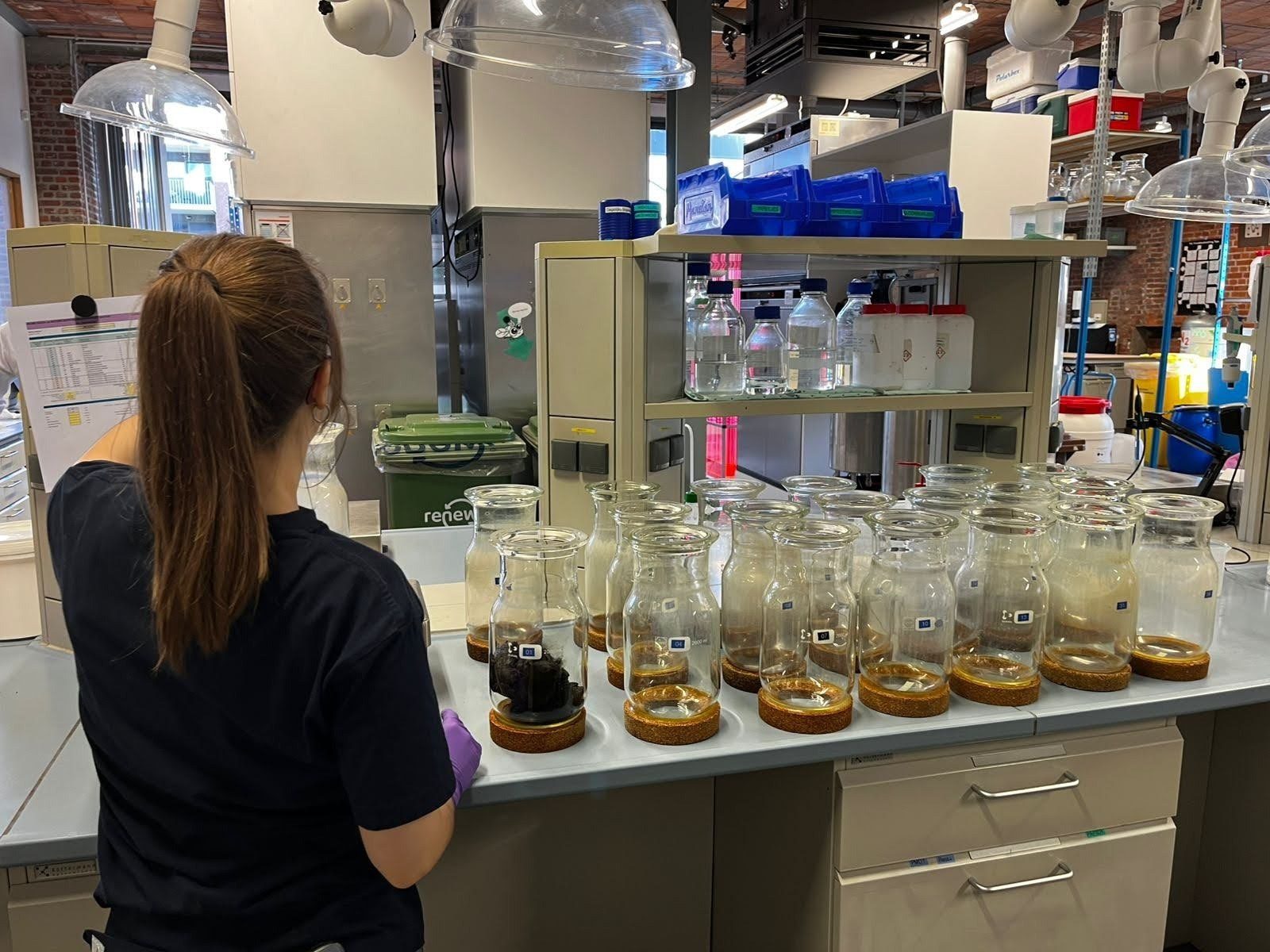
A biodegradation study evaluates how bioplastics, paper-based packaging, or other organic materials behave inside the DRANCO anaerobic digestion process, optionally followed by aerobic composting.
Through controlled laboratory testing, we determine how well a material disintegrates, how fast this occurs, and whether visible residues remain after digestion and composting.
The study combines:
- Anaerobic digestion testing under DRANCO-relevant thermophilic or mesophilic, high-solids conditions.
- Aerobic composting to simulate typical downstream treatment after digestion.
- Sieving and visual inspection to quantify the remaining material and assess impurity levels.
This gives a realistic indication of how your product behaves in full‑scale organic waste treatment plants.
Note: our laboratory currently operates without formal accreditation.
What we offer
Why should you do it?
Producers and waste managers increasingly need to demonstrate whether biobased or biodegradable products are compatible with real organic waste treatment. A DRANCO‑specific biodegradation study helps you:
Verify performance in real process conditions
Standard compostability certifications rarely represent DRANCO’s dry, thermophilic digestion environment. Our tests provide insights into actual disintegration behaviour in the DRANCO process.
Assess product design choices
Even thin coatings, films, or laminates can hinder biodegradation. Our study identifies such limiting components early in development.
Support market claims
Objective data on biodegradation and fragmentation supports transparent environmental communication.
Improve acceptance in industrial waste streams
Waste operators increasingly require proof of biodegradability before accepting new materials into organic recycling routes.
The result: a clear understanding of whether your material fits within modern circular waste management systems.
What do we need?
To evaluate the biodegradation of your material, we require product samples. A minimum of 20–50 g of each test item is needed (depending on density and geometry). If several product types or variants are tested, each must be supplied separately.
Materials may include:
- Bioplastic items (PLA, PBAT, blends, etc.)
- Paper and cardboard products, with or without coatings
- Food service packaging
- Other organic or biobased materials
What do we deliver?
During the study, your samples undergo:
A. Anaerobic digestion (±21 days): Test pieces are mixed with active DRANCO digestate and incubated at thermophilic or mesophilic, under high-solids, oxygen-free conditions. Throughout the test, we document: progressive visual degradation, the behaviour of coatings or films, and the fragmentation characteristics.
B. Aerobic composting (±35 days): Digestate containing degraded material is transferred to an aerated composting reactor at 58°C ± 2°C. We monitor the following aspects:
Further breakdown of remaining fragments
Integration of material into compost
Persistence of visible plastic or polymer elements
C. Selection (sieving & analysis): At the end of the test material is sieved at 10 mm. Next, the remaining >10 mm fragments are isolated, weighed, and documented. A subsample of <10 mm fraction is checked for visible residues. These results indicate overall biodegradation, visible impurities, and the presence of non‑degradable components.
Final deliverables:
You receive a clear, structured report including:
Detailed description of test setup and conditions
Time‑resolved visual observations (with photos)
Quantification of remaining material after digestion and composting
Assessment of coatings, films, or persistent components
Interpretation specific to the DRANCO process
This provides a complete and transparent overview of your material’s biodegradation performance under DRANCO conditions.